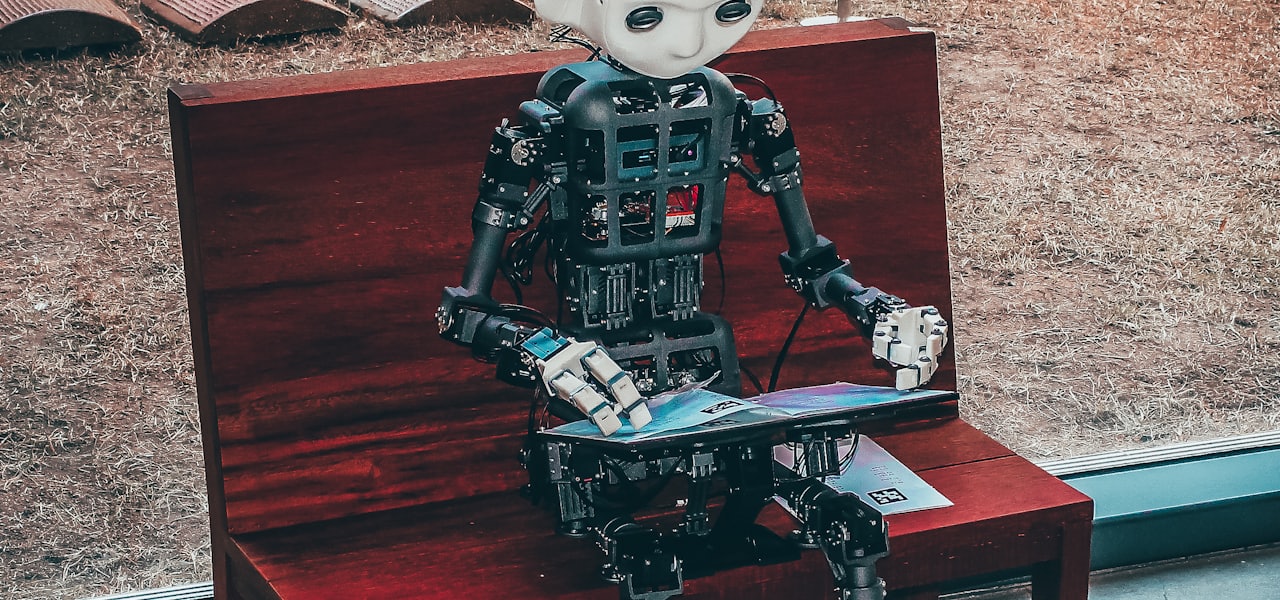
Office automation refers to the varied computer machinery and software used to digitally create, collect, store, manipulate, and relay office information needed for accomplishing basic tasks. Raw data storage, electronic transfer, and the management of electronic business information comprise the basic activities of an office automation system. Office automation helps in optimizing or automating existing office procedures. The backbone of office automation is a local area network, which allows users to transfer data, mail and voice across the network. All office functions, including dictation, typing, filing, copying, fax, telex, microfilm and records management, telephone and telephone switchboard operations, fall into this category. Office automation was a popular term in the 1970s and 1980s as the desktop computer exploded onto the scene. Advantages of office automation include that it can get many tasks accomplished faster, it eliminates the need for a large staff, less storage is required to store data, and multiple people can update data simultaneously in the event of changes in schedule. == Outline == Businesses can easily purchase and stock their wares with the aid of technology. Many of the manual tasks that used to be done by hand can now be done through hand held devices and UPC and SKU coding. In the retail setting, automation also increases choice. Customers can easily process their payments through automated credit card machines and no longer have to wait in line for an employee to process and manually type in the credit card numbers. Office payrolls have been automated, which means no one has to manually cut checks, and those checks that are cut can be printed through computer programs. Direct deposit can be automatically set up and this further reduces the manual process, and most employees who participate in direct deposit often find their paychecks come earlier than if they'd have to wait for their checks to be written and then cleared by the bank. Other ways automation has reduced employee manpower on tasks is automated voice direction. Through the use of prompts, automated phone menus and directed calls, the need for employees to be dedicated to answer the phones has been reduced, and in some cases, eliminated.
Anomaly Detection at Multiple Scales
Anomaly Detection at Multiple Scales, or ADAMS was a $35 million DARPA project designed to identify patterns and anomalies in very large data sets. It is under DARPA's Information Innovation office and began in 2011 and ended in August 2014 The project was intended to detect and prevent insider threats such as "a soldier in good mental health becoming homicidal or suicidal", an "innocent insider becoming malicious", or "a government employee [who] abuses access privileges to share classified information". Specific cases mentioned are Nadal Malik Hasan and WikiLeaks source Chelsea Manning. Commercial applications may include finance. The intended recipients of the system output are operators in the counterintelligence agencies. A final report was published on May 11, 2015, detailing a system known as Anomaly Detection Engine for Networks, or ADEN, developed by the University of Maryland, College Park, whose goal was to "identify malicious users within a network." Using multiple datasets from Wikipedia, Slashdot, and others, researchers were able to identify vandals and malicious users on a website using both conventional algorithms and artificial intelligence. The Proactive Discovery of Insider Threats Using Graph Analysis and Learning was part of the ADAMS project. The Georgia Tech team includes noted high-performance computing researcher David Bader (computer scientist).
Vector-field consistency
Vector-Field Consistency is a consistency model for replicated data (for example, objects), initially described in a paper which was awarded the best-paper prize in the ACM/IFIP/Usenix Middleware Conference 2007. It has since been enhanced for increased scalability and fault-tolerance in a recent paper. == Description == This consistency model was initially designed for replicated data management in ad hoc gaming in order to minimize bandwidth usage without sacrificing playability. Intuitively, it captures the notion that although players require, wish, and take advantage of information regarding the whole of the game world (as opposed to a restricted view to rooms, arenas, etc. of limited size employed in many multiplayer video games), they need to know information with greater freshness, frequency, and accuracy as other game entities are located closer and closer to the player's position. It prescribes a multidimensional divergence bounding scheme, based on a vector field that employs consistency vectors k=(θ,σ,ν), standing for maximum allowed time - or replica staleness, sequence - or missing updates, and value - or user-defined measured replica divergence, applied to all space coordinates in game scenario or world. The consistency vector-fields emanate from field-generators designated as pivots (for example, players) and field intensity attenuates as distance grows from these pivots in concentric or square-like regions. This consistency model unifies locality-awareness techniques employed in message routing and consistency enforcement for multiplayer games, with divergence bounding techniques traditionally employed in replicated database and web scenarios.
Exploratory search
Exploratory search is a specialization of information exploration which represents the activities carried out by searchers who are: unfamiliar with the domain of their goal (i.e. need to learn about the topic in order to understand how to achieve their goal) or unsure about the ways to achieve their goals (either the technology or the process) or unsure about their goals in the first place. Exploratory search is distinguished from known-item search, for which the searcher has a particular target in mind. Consequently, exploratory search covers a broader class of activities than typical information retrieval, such as investigating, evaluating, comparing, and synthesizing, where new information is sought in a defined conceptual area; exploratory data analysis is another example of an information exploration activity. Typically, therefore, such users generally combine querying and browsing strategies to foster learning and investigation. == History == Exploratory search is a topic that has grown from the fields of information retrieval and information seeking but has become more concerned with alternatives to the kind of search that has received the majority of focus (returning the most relevant documents to a Google-like keyword search). The research is motivated by questions like "What if the user doesn't know which keywords to use?" or "What if the user isn't looking for a single answer?" Consequently, research has begun to focus on defining the broader set of information behaviors in order to learn about the situations when a user is, or feels, limited by only having the ability to perform a keyword search. In the last few years, a series of workshops has been held at various related and key events. In 2005, the Exploratory Search Interfaces workshop focused on beginning to define some of the key challenges in the field. Since then a series of other workshops has been held at related conferences: Evaluating Exploratory Search at SIGIR06 and Exploratory Search and HCI at CHI07 (in order to meet with the experts in human–computer interaction). In March 2008, an Information Processing and Management special issue focused particularly on the challenges of evaluating exploratory search, given the reduced assumptions that can be made about scenarios of use. In June 2008, the National Science Foundation sponsored an invitational workshop to identify a research agenda for exploratory search and similar fields for the coming years. == Research challenges == === Important scenarios === With the majority of research in the information retrieval community focusing on typical keyword search scenarios, one challenge for exploratory search is to further understand the scenarios of use for when keyword search is not sufficient. An example scenario, often used to motivate the research by mSpace, states: if a user does not know much about classical music, how should they even begin to find a piece that they might like. Similarly, for patients or their carers, if they don't know the right keywords for their health problems, how can they effectively find useful health information for themselves? === Designing new interfaces === With one of the motivations being to support users when keyword search is not enough, some research has focused on identifying alternative user interfaces and interaction models that support the user in different ways. An example is faceted search which presents diverse category-style options to the users, so that they can choose from a list instead of guess a possible keyword query. Many of the interactive forms of search, including faceted browsers, are being considered for their support of exploratory search conditions. Computational cognitive models of exploratory search have been developed to capture the cognitive complexities involved in exploratory search. Model-based dynamic presentation of information cues are proposed to facilitate exploratory search performance. === Evaluating interfaces === As the tasks and goals involved with exploratory search are largely undefined or unpredictable, it is very hard to evaluate systems with the measures often used in information retrieval. Accuracy was typically used to show that a user had found a correct answer, but when the user is trying to summarize a domain of information, the correct answer is near impossible to identify, if not entirely subjective (for example: possible hotels to stay in Paris). In exploration, it is also arguable that spending more time (where time efficiency is typically desirable) researching a topic shows that a system provides increased support for investigation. Finally, and perhaps most importantly, giving study participants a well specified task could immediately prevent them from exhibiting exploratory behavior. === Models of exploratory search behavior === There have been recent attempts to develop a process model of exploratory search behavior, especially in social information system (e.g., see models of collaborative tagging. The process model assumes that user-generated information cues, such as social tags, can act as navigational cues that facilitate exploration of information that others have found and shared with other users on a social information system (such as social bookmarking system). These models provided extension to existing process model of information search that characterizes information-seeking behavior in traditional fact-retrievals using search engines. Recent development in exploratory search is often concentrated in predicting users' search intents in interaction with the user. Such predictive user modeling, also referred as intent modeling, can help users to get accustomed to a body of domain knowledge and help users to make sense of the potential directions to be explored around their initial, often vague, expression of information needs. == Major figures == Key figures, including experts from both information seeking and human–computer interaction, are: Marcia Bates Nicholas Belkin Gary Marchionini m.c. schraefel Ryen W. White
Predictor–corrector method
In numerical analysis, predictor–corrector methods belong to a class of algorithms designed to integrate ordinary differential equations – to find an unknown function that satisfies a given differential equation. All such algorithms proceed in two steps: The initial, "prediction" step, starts from a function fitted to the function-values and derivative-values at a preceding set of points to extrapolate ("anticipate") this function's value at a subsequent, new point. The next, "corrector" step refines the initial approximation by using the predicted value of the function and another method to interpolate that unknown function's value at the same subsequent point. == Predictor–corrector methods for solving ODEs == When considering the numerical solution of ordinary differential equations (ODEs), a predictor–corrector method typically uses an explicit method for the predictor step and an implicit method for the corrector step. === Example: Euler method with the trapezoidal rule === A simple predictor–corrector method (known as Heun's method) can be constructed from the Euler method (an explicit method) and the trapezoidal rule (an implicit method). Consider the differential equation y ′ = f ( t , y ) , y ( t 0 ) = y 0 , {\displaystyle y'=f(t,y),\quad y(t_{0})=y_{0},} and denote the step size by h {\displaystyle h} . First, the predictor step: starting from the current value y i {\displaystyle y_{i}} , calculate an initial guess value y ~ i + 1 {\displaystyle {\tilde {y}}_{i+1}} via the Euler method, y ~ i + 1 = y i + h f ( t i , y i ) . {\displaystyle {\tilde {y}}_{i+1}=y_{i}+hf(t_{i},y_{i}).} Next, the corrector step: improve the initial guess using trapezoidal rule, y i + 1 = y i + 1 2 h ( f ( t i , y i ) + f ( t i + 1 , y ~ i + 1 ) ) . {\displaystyle y_{i+1}=y_{i}+{\tfrac {1}{2}}h{\bigl (}f(t_{i},y_{i})+f(t_{i+1},{\tilde {y}}_{i+1}){\bigr )}.} That value is used as the next step. === PEC mode and PECE mode === There are different variants of a predictor–corrector method, depending on how often the corrector method is applied. The Predict–Evaluate–Correct–Evaluate (PECE) mode refers to the variant in the above example: y ~ i + 1 = y i + h f ( t i , y i ) , y i + 1 = y i + 1 2 h ( f ( t i , y i ) + f ( t i + 1 , y ~ i + 1 ) ) . {\displaystyle {\begin{aligned}{\tilde {y}}_{i+1}&=y_{i}+hf(t_{i},y_{i}),\\y_{i+1}&=y_{i}+{\tfrac {1}{2}}h{\bigl (}f(t_{i},y_{i})+f(t_{i+1},{\tilde {y}}_{i+1}){\bigr )}.\end{aligned}}} It is also possible to evaluate the function f only once per step by using the method in Predict–Evaluate–Correct (PEC) mode: y ~ i + 1 = y i + h f ( t i , y ~ i ) , y i + 1 = y i + 1 2 h ( f ( t i , y ~ i ) + f ( t i + 1 , y ~ i + 1 ) ) . {\displaystyle {\begin{aligned}{\tilde {y}}_{i+1}&=y_{i}+hf(t_{i},{\tilde {y}}_{i}),\\y_{i+1}&=y_{i}+{\tfrac {1}{2}}h{\bigl (}f(t_{i},{\tilde {y}}_{i})+f(t_{i+1},{\tilde {y}}_{i+1}){\bigr )}.\end{aligned}}} Additionally, the corrector step can be repeated in the hope that this achieves an even better approximation to the true solution. If the corrector method is run twice, this yields the PECECE mode: y ~ i + 1 = y i + h f ( t i , y i ) , y ^ i + 1 = y i + 1 2 h ( f ( t i , y i ) + f ( t i + 1 , y ~ i + 1 ) ) , y i + 1 = y i + 1 2 h ( f ( t i , y i ) + f ( t i + 1 , y ^ i + 1 ) ) . {\displaystyle {\begin{aligned}{\tilde {y}}_{i+1}&=y_{i}+hf(t_{i},y_{i}),\\{\hat {y}}_{i+1}&=y_{i}+{\tfrac {1}{2}}h{\bigl (}f(t_{i},y_{i})+f(t_{i+1},{\tilde {y}}_{i+1}){\bigr )},\\y_{i+1}&=y_{i}+{\tfrac {1}{2}}h{\bigl (}f(t_{i},y_{i})+f(t_{i+1},{\hat {y}}_{i+1}){\bigr )}.\end{aligned}}} The PECEC mode has one fewer function evaluation than PECECE mode. More generally, if the corrector is run k times, the method is in P(EC)k or P(EC)kE mode. If the corrector method is iterated until it converges, this could be called PE(CE)∞.
Automated medical scribe
Automated medical scribes (also called artificial intelligence scribes, AI scribes, digital scribes, virtual scribes, ambient AI scribes, AI documentation assistants, and digital/virtual/smart clinical assistants) are tools for transcribing medical speech, such as patient consultations and dictated medical notes. Many also produce summaries of consultations. Automated medical scribes based on large language models (LLMs, commonly called "AI", short for "artificial intelligence") increased drastically in popularity in 2024. There are privacy and antitrust concerns. Accuracy concerns also exist, and intensify in situations in which tools try to go beyond transcribing and summarizing, and are asked to format information by its meaning, since LLMs do not deal well with meaning (see weak artificial intelligence). Medics using these scribes are generally expected to understand the ethical and legal considerations, and supervise the outputs. The privacy protections of automated medical scribes vary widely. While it is possible to do all the transcription and summarizing locally, with no connection to the internet, most closed-source providers require that data be sent to their own servers over the internet, processed there, and the results sent back (as with digital voice assistants). Some retailers say their tools use zero-knowledge encryption (meaning that the service provider can't access the data). Others explicitly say that they use patient data to train their AIs, or rent or resell it to third parties; the nature of privacy protections used in such situations is unclear, and they are likely not to be fully effective. Most providers have not published any safety or utility data in academic journals, and are not responsive to requests from medical researchers studying their products. == Privacy == Some providers unclear about what happens to user data. Some may sell data to third parties. Some explicitly send user data to for-profit tech companies for secondary purposes, which may not be specified. Some require users to sign consents to such reuse of their data. Some ingest user data to train the software, promising to anonymize it; however, deanonymization may be possible (that is, it may become obvious who the patient is). It is intrinsically impossible to prevent an LLM from correlating its inputs; they work by finding similar patterns across very large data sets. Some information on the patient will be known from other sources (for instance, information that they were injured in an incident on a certain day might be available from the news media; information that they attended specific appointment locations at specific times is probably available to their cellphone provider/apps/data brokers; information about when they had a baby is probably implied by their online shopping records; and they might mention lifestyle changes to their doctor and on a forum or blog). The software may correlate such information with the "anonymized" clinical consultation record, and, asked about the named patient, provide information which they only told their doctor privately. Because a patient's record is all about the same patient, it is all unavoidably linked; in very many cases, medical histories are intrinsically identifiable. Depending on how common a condition and what other data is available, K-anonymity may be useless. Differential privacy could theoretically preserve privacy. Data broker companies like Google, Amazon, Apple and Microsoft have produced or bought up medical scribes, some of which use user data for secondary purposes, which has led to antitrust concerns. Transfer of patient records for AI training has, in the past, prompted legal action. Open-source programs typically do all the transcription locally, on the doctor's own computer. Open-source software is widely used in healthcare, with some national public healthcare bodies holding hack days. === Data resale and commercialization === Several AI medical scribe providers include terms in their service agreements that allow the reuse, sale, or commercialization of de-identified or user-submitted data. Although such data are generally described as anonymized or aggregated, these practices have raised ethical concerns among clinicians and privacy advocates regarding secondary uses of medical information beyond clinical documentation. Freed, an AI transcription and scribe platform, states in its Terms of Use that it may "collect, use, publish, disseminate, sell, transfer, and otherwise exploit" de-identified and aggregated data derived from user inputs. OpenEvidence similarly states that it may "collect, use, transfer, sell, and disclose non-personal information and customer usage data for any purpose including commercial uses." Doximity, which offers an AI-enabled medical scribe as part of its physician platform, grants itself a "nonexclusive, irrevocable, worldwide, perpetual, unlimited, assignable, sublicensable, royalty-free" license to "copy, prepare derivative works from, improve, distribute, publish, ... analyze, index, tag, [and] commercialize" content submitted by users, subject to its privacy policy. Because these terms allow broad secondary use—including sale, licensing, model-training, derivative works, and commercial exploitation of de-identified or user-submitted data—some commentators have recommended that clinicians review data-handling provisions carefully when adopting AI-scribe tools, particularly in clinical environments where patient privacy and regulatory compliance are critical. === Encryption === Multifactor authentication for access to the data is expected practice. Typically, Diffie–Hellman key exchange is used for encryption; this is the standard method commonly used for things like online banking. This encryption is expensive but not impossible to break; it is not generally considered safe against eavesdroppers with the resources of a nation-state. If content is encrypted between the client and the service provider's remote server (transport cryptography), then the server has an unencrypted copy. This is necessary if the data is used by the service provider (for instance, to train the software). Zero-knowledge encryption implies that the only unencrypted copy is at the client, and the server cannot decrypt the data any more easily than a monster-in-the-middle attacker. == Platforms == Scribes may operate on desktops, laptop, or mobile computers, under a variety of operating systems. These vary in their risks; for instance, mobiles can be lost. The underlying mobile or desktop operating systems are also part of the trusted computing base, and if they are not secure, the software relying on them cannot be secure either. Some AI medical scribe platforms are designed to operate as cloud-based applications that generate structured clinical documentation from clinician–patient conversations. These systems may offer features such as real-time transcription, document generation, and integration with electronic health record (EHR) systems. == Confabulation, omissions, and other errors == Like other LLMs, medical-scribe LLMs are prone to hallucinations, where they make up content based on statistically associations between their training data and the transcription audio. LLMs do not distinguish between trying to transcribe the audio and guessing what words will come next, but perform both processes mixed together. They are especially likely to take short silences or non-speech noises and invent some sort of speech to transcribe them as. LLM medical scribes have been known to confabulate racist and otherwise prejudiced content; this is partly because the training datasets of many LLMs contain pseudoscientific texts about medical racism. They may misgender patients. A survey found that most doctors preferred, in principle, that scribes be trained on data reviewed by medical subject experts. Relevant, accurate training data increases the probability of an accurate transcription, but does not guarantee accuracy. Software trained on thousands of real clinical conversations generated transcripts with lower word error rates. Software trained on manually-transcribed training data did better than software trained with automatically transcribed training data such as YouTube captions. Autoscribes omit parts of the conversation classes as irrelevant. The may wrongly classify pertinent information as irrelevant and omit it. They may also confuse historic and current symptoms, or otherwise misclassify information. They may also simply wrongly transcribe the speech, writing something incorrect instead. If clinicians do not carefully check the recording, such mistakes could make their way into their medical records and cause patient harms. == Patient consent == Professional organizations generally require that scribes be used only with patient consent; some bodies may require written consent. Medics must also abide by local surveillance laws, which may criminalize recording pri
AI: When a Robot Writes a Play
AI: When a Robot Writes a Play (in Czech: AI: Když robot píše hru) is a 2021 experimental theatre play, where 90% of its script was automatically generated by artificial intelligence (the GPT-2 language model). The play is in Czech language, but an English version of the script also exists. == Creation == The play is the first result of the THEaiTRE research project, aiming to commemorate the centenary of the R.U.R. play by Karel Čapek by investigating to what extent artificial intelligence could be used to create theatre play scripts. The script of the play was created using the THEaiTRobot tool, based on the GPT-2 language model. First, the play dramaturge, David Košťák, described the initial setting of each scene in a few sentences, and wrote the first line for each character. Next, THEaiTRobot suggested a continuation of the script, which the dramaturge could use, reject, or use part of it and let the tool generate a new continuation. Another option was to manually insert another line or a scenic remark. The script was generated in English and was automatically translated to Czech by the state-of-the-art CUBBITT machine translation tool. The resulting script was then further post-edited by the dramaturge. The resulting script was made freely available for non-commercial use both in English and in Czech, with marked manually inserted texts and manual edits. The analysis shows that 90% of the English script is automatically generated, with 10% manually written or manually post-edited. In the Czech script, a larger amount of edits were made, but the analysis claims that these additional edits are corrections of errors of the automated translation and stylistic corrections which do not change the meaning of the lines as represented by the English script, but rather bring the Czech script closer to the English one. == Characters == The play contains 9 characters. The Robot appears in all the scenes, while each of the other characters appears in only one scene. Robot – The lead character, a male humanoid robot. Master – An old man, the creator of the Robot. Boy – A schoolboy. Masseuse – A sex worker in a brothel. Stranger – An engineer. Man. Psychologist. Administrator – A female clerk at an employment agency. Actress – A film actress and a model in a robot-like costume. == Plot == The play is composed of 8 scenes. It tells the story of a humanoid robot, who encounters 8 other characters and engages into various typically human situations and activities, related to death, love, sex, violence, etc. The individual scenes are not tightly linked, but there are some linking points, such as the central character of the robot or some repeated and developing themes, such as the robot's search for love. The scenes often contain some absurd turns and it is often hard to find sense in them. It is therefore a very complicated piece interpretationally, requiring the director and the actors to invest a lot of effort and creativity in finding a meaningful interpretation which would not deviate from the script. In the interpretation by Švanda theatre, who premiered the play and who also participated on the creation of the script, the scenes typically contain non-verbally expressed content which can add a lot to the meaning of the scene compared to what is contained in the actual script (as the script only contains the lines said by the characters). === Scene 1: Death === The play opens by the Robot parting with his dying Master. The Master gives the Robot several last lessons and talks with him about death, soul, and love. === Scene 2: Sense of Humour === In the second scene, the Robot meets a sad and angry Boy, who complains that he wants to go to school, that his girlfriend is crazy, that he wants to buy a car, etc. The Robot tries to help the Boy by giving him advice, but the Boy's reactions are quite negative and irritated. The Boy then repeatedly asks the Robot to tell him a joke; the Robot keeps refusing, but ultimately tells the following joke: When you are dead. When your children are dead. When your grandchildren are dead, I will be still alive. === Scene 3: Nightclub === The Robot wants to feel pleasure, so he goes to a "night club" (a brothel), where he meets a "Masseuse" (a prostitute). The Robot is initially "a bit cold", but eventually manages to enjoy the experience and falls in love with the Masseuse. In the Švanda theatre performance, the Robot and the Masseuse seem to have a sort of virtual sex without touching each other, reminiscent of the sex scene in Demolition Man. === Scene 4: Fear of the Dark === It is the night. The Robot is standing under a lamp, unable to move away from the light as he finds that he is afraid of the dark. He meets a Stranger, an engineer who tells him that robots don't have feelings and that people cannot be trusted, and keeps hurting him. In the Švanda theatre performance, the Man repeatedly zaps the Robot with some kind of electric pulse. === Scene 5: Killer Robot === A Man approaches the Robot and repeatedly asks him to kill him. Instead, the Robot sticks a finger into the Man's anus, which leads to an argument between the Man and the Robot. === Scene 6: Burn Out === The Robot meets a Psychologist, who keeps asking him lots of questions regarding his life, burnout feeling, love, relationships, and emotions. They also talk about the Robot using a device called emotion machine which helps him to get rid of stress. === Scene 7: Search for Job === The Robot comes to an employment agency. He meets an Administrator and asks her to help him find a job. He expresses the wish to become an actor, and talks about his experience as a clown. He reveals his name to be Troy McClure, which is a character from The Simpsons who is an actor. In the Švanda theatre performance, the Administrator starts to seduce the Robot once his name is revealed, which he keeps ignoring; the Administrator then becomes irritated. === Scene 8: Love at First Sight === The Robot meets a human Actress in a robotic costume and falls in love with her immediately. The Actress is first reluctant, but the Robot manages to seduce her and she also falls in love with him. The Robot tells her about a binary world, in which he lives and where he will also take her. Ultimately, the Actress agrees, and the whole play concludes by the Robot and the Actress promising each to other to always be together. In the Švanda theatre performance, the Robot does not have a physical body in this scene, we can only hear his voice and see a pulsating light (based on the line in the script where the Robot says: "I have no body. So I don't need to wear clothes. You can't see me, you only hear me."), and the Actress eventually also agrees to lose her physical body so that she can be with the Robot forever. == Theatrical performances == The play premiered on 26 February 2021 in Švanda Theatre in Prague, Czech Republic, directed by Daniel Hrbek. Due to the COVID-19 pandemic, the play was not played in front of a live audience, but it was broadcast online, in Czech language with English subtitles. The play was followed by a panel discussion by the project members and experts on artificial intelligence. The premiere was viewed by 13,498 spectators worldwide. A short trailer of the premiere is available on YouTube. In 2021, after the opening of the theatres in the Czech Republic to spectators, the play can be viewed at Švanda Theatre. The performance takes approximately 60 minutes, and is followed by a discussion of the creators with the audience. The derniere is planned for 4 February 2023. == Reception == The play received a number of reviews, both in its country of origin as well as internationally. It is praised as first of its kind, although some reviewers note the similarity to previous works, such as the musical Beyond the Fence, the play Lifestyle of the Richard and Family, or the short movie Sunspring; however, these works used less advanced technology, and either were very short (Sunspring) or necessitated a larger amount of human interventions. The reviewers note that the script is far from perfect, with many inconsistencies and nonsensical parts, and conclude that the technology is definitely not yet ready to replace human authors; however, some find some parts of the script frighteningly human-like. The amount of human intervention is a somewhat controversial topic, with some reviewers finding the human influence too large (especially in interpreting the script and putting the play on scene), while others feel that a greater amount of human intervention would have been favorable as this could greatly improve the quality of the play. The reviews also frequently comment on the amount of sex, violence and strong language in the play; this can be attributed to the method used for creating the script, where the GPT-2 language model reflects topics and language common in the human-written articles on the internet that were used to train the model. Furthermore, some r